Happy Magnolia Font: Adding Warmth to Small Business Branding
Last Tuesday, I found myself staring at a stack of plain white candle labels on my desk, feeling completely uninspired. The product inside was a hand-poured lavender and vanilla soy candle that smelled like comfort, but the packaging looked sterile and disconnected from that experience. As a creative consultant who helps small businesses refine their visual identity, I know that typography is often the missing link between a good product and a memorable brand. I needed a typeface that felt human, approachable, and distinctly handmade without looking messy or amateur. That is when I decided to test Happy Magnolia on a real client project to see if it could bridge the gap between professional polish and personal warmth.
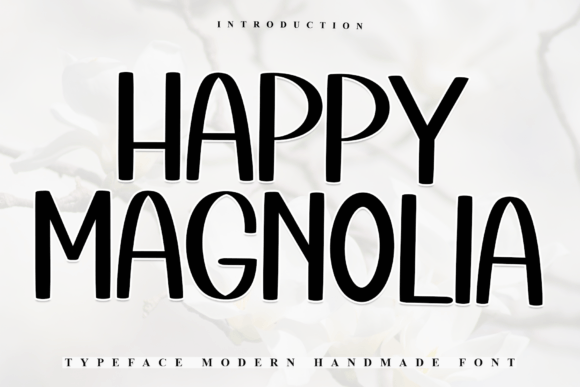
Happy Magnolia is a handwritten font that immediately stands out in the crowded category of Script Amp fonts because of its genuine charm. Unlike many display fonts that prioritize elaborate swashes over function, this typeface maintains a playful yet legible style. It exudes a specific kind of warmth that is difficult to manufacture digitally. When I applied it to those candle labels, the transformation was instant. The text didn't just sit on the sticker; it danced with the matte paper texture, making the entire package feel like a gift rather than a commodity. For small business owners, finding a premium font that balances whimsy with readability is essential for creating packaging design that customers actually want to keep and share.
Testing Readability on Product Labels and Packaging
The biggest concern for any entrepreneur using a creative font is whether customers can actually read it. In my testing with Happy Magnolia, I focused heavily on practical application across different sizes and surfaces. We used it for the primary scent name on a 3-inch circular label and for "Thank You" stickers on shipping boxes. The letterforms are open and airy, which prevents the ink from bleeding together on textured paper or appearing pixelated on mobile screens. This legibility is crucial for brand perception; if a customer has to squint to read your ingredients or product name, the trust factor drops immediately.
However, this typeface shines brightest as a display font rather than body copy. During our mockup phase, I discovered that Happy Magnolia works beautifully for headlines, short phrases, logos, and decorative accents, but it should not be used for dense paragraphs of text. For the back of the candle jar where safety instructions and ingredient lists live, we paired Happy Magnolia with a clean, modern sans serif font. This created a visual hierarchy that guided the eye naturally: the playful script drew attention to the scent profile, while the structured sans serif delivered the necessary information clearly. This simple font pairing strategy made the label look editorial and intentional, proving that you don't need to sacrifice professionalism to achieve a handmade aesthetic.
Elevating Digital Presence and Social Media Graphics
Brand consistency extends far beyond physical products. A major part of our rebrand involved updating Instagram templates and website banners to match the new packaging vibe. Typography affects first impressions in digital spaces just as much as in print. When scrolling through a feed, users make split-second judgments about a brand's quality based on visual cues. Happy Magnolia translated exceptionally well to social media graphics because its organic strokes contrast nicely against solid color backgrounds and lifestyle photography.
- Instagram Stories: Used for interactive prompts and sale announcements to drive engagement without looking like a generic ad.
- Website Hero Banners: Applied to seasonal collection titles to create an immediate emotional connection upon landing.
- Email Marketing Headers: Utilized in newsletters to maintain the boutique feel even in a corporate inbox environment.
- Digital Ads: Tested in square formats where the bold, handwritten style stopped the scroll more effectively than standard system fonts.
One specific win was using the font for limited-edition drop announcements. The inherent personality of Happy Magnolia made the digital promotion feel exclusive and special, mirroring the unboxing experience. For online sellers and content creators, having a go-to creative font that performs well across both print and web design assets saves time and ensures your brand identity remains recognizable everywhere your customers encounter you.
Strategic Pairing and Commercial Licensing Considerations
While Happy Magnolia carries a lot of visual weight on its own, understanding how to support it is key to long-term branding success. As mentioned earlier, pairing is everything. For a bakery or café refreshing menus, this script font pairs wonderfully with an elegant serif font for subheadings to evoke a sense of tradition and quality. Conversely, for a modern beauty brand or coaching business, combining it with a minimalist geometric sans serif creates a contemporary, fresh look that appeals to younger demographics. The goal is always balance; let Happy Magnolia be the star of the show for your logo design and key messaging, while other typefaces handle the structural heavy lifting.
Before integrating any new typeface into your business materials, it is vital to review the technical and legal details. Always check the included styles and file formats to ensure compatibility with your design software, whether you use Canva, Illustrator, or Procreate. Look for multilingual support if you serve diverse communities or plan to expand internationally. Most importantly, verify the commercial font licensing terms. Using a font for personal crafting is very different from printing it on merchandise, packaging, or client work. Ensuring you have the proper commercial license protects your business and supports the type designer. When used correctly and legally, Happy Magnolia becomes more than just a design asset; it becomes a foundational element of a trustworthy, consistent, and deeply memorable brand identity that resonates with customers on an emotional level.